What is Pitra Dosh Puja? The Complete Vedic Guide to Ancestral Healing and Remedies
What Causes Pitra Dosh in Vedic Astrology? In Vedic philosophy, our birth into a specific lineage (Kula) is not random. We inherit both physical genetics and karmic debts (Pitra Rina) from our forefathers. Pitra Dosh occurs when Rahu or Ketu forms a conjunction or harsh aspect with the Sun (Surya) or Moon (Chandra)—or when the
9th House (the house of father, fortune, and ancestral karma) is heavily afflicted by malefic planets like Saturn, Rahu, or Mars.
[Sun / Moon (Light / Soul)] + [Rahu / Ketu (Shadow)] | v ==> [PITRA DOSH IN THE 9TH HOUSE] <== | v (Unresolved Ancestral Debts & Lineage Blocks) Celestial & Scriptural DriversSun (Surya Dev): Represents father, self-respect, soul, and paternal ancestors. Moon (Chandra Dev): Represents mother, mind, emotional roots, and maternal ancestors. Rahu / Ketu: Represents unresolved desires, past-life debts, and karmic shadows. When Rahu eclipses the Sun or Moon in sensitive houses, it indicates that ancestral rites (Shraddha, Tarpan, or final rites) were either missed, performed improperly, or that ancestors passed away unexpectedly with unfulfilled wishes. Key Symptoms of an Active Pitra Dosh in Your FamilyWhen an unmitigated Pitra Dosh exists in a family lineage, several recurring patterns tend to affect generations:Obstacles in Progeny (Santan Prapti): Repeated miscarriages, unexplained inability to conceive, or severe health problems in newborn children. Marital Delays & Constant Friction: Inability to find a suitable match, engagements breaking repeatedly, or chronic conflict within marriage. Poverty & Financial Stagnation: Continuous loss of money, accumulated debts despite hard work, and lack of career growth. Unexplained Health Issues: Recurring inherited medical problems, chronic mental depression, or addiction among family members. Frequent Dreams of Deceased Relatives: Regularly dreaming of departed ancestors asking for food, clothing, or looking distressed. Insight from an Acharya: Deceased ancestors (Pitrus) do not wish harm upon their own bloodline. When they are in a state of unrest, their distress reflects into our lives as subtle energetic barriers. Performing Pitra Dosh Puja is not done out of fear; it is an act of deep filial love, respect, and gratitude that liberates both the departed souls and the living descendants. Types of Pitra Dosh & House AfflictionsDepending on how planetary energy interacts with the 9th house, Pitra Dosh manifests across different areas of life:House AlignmentPrimary Area AffectedManifestation Pattern
1st House (Lagna)Health & MindContinuous self-doubt, lack of identity, physical weakness, personality blocks.
2nd HouseFamily Wealth & SpeechFamily disputes over inheritance, loss of ancestral wealth, harsh speech. 5th HouseChildren & IntelligenceSevere delays or hurdles in having children, memory issues, educational blocks.
9th House (Dharma/Pitra)Luck & AncestryMisfortune, downfall right before success, spiritual detachment, paternal strain.
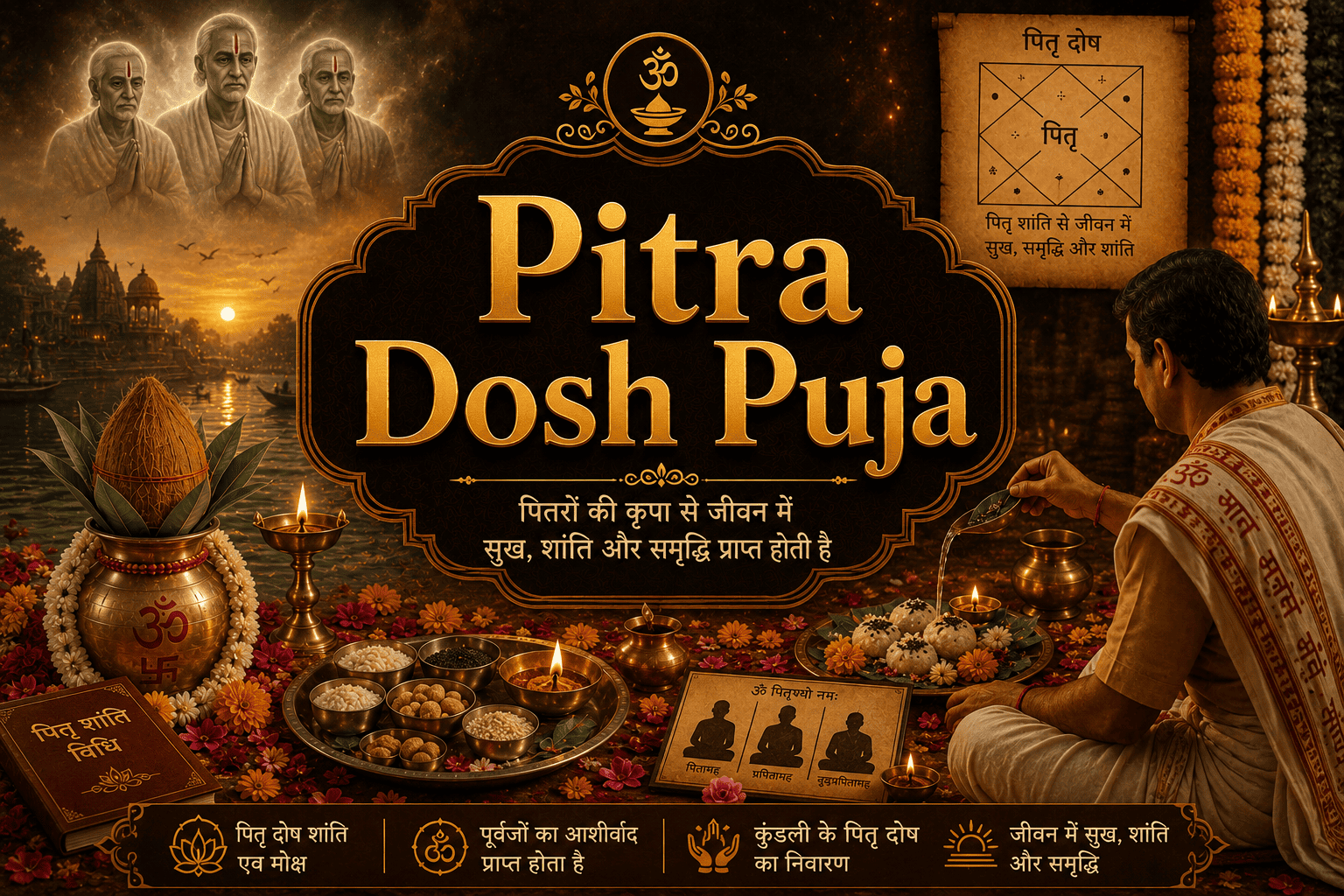
10th HouseCareer & Public LifeTotal instability in job or business, loss of reputation, legal troubles. The Vedic Solution: Step-by-Step Pitra Dosh Nivaran PujaTo resolve ancestral debts, traditional Vedic Karmakand prescribes the Pitra Dosh Shanti Puja, Pind Daan, and Til Tarpan. This ritual primarily invokes Lord Vishnu (the ultimate preserver and liberator of souls), Lord Shiva, and Yama Dev. Phase 1: Essential Samagri (Ritual Items)To perform this ritual accurately, specific offerings representing purity, earth, and ancestral satisfaction are required:For Tarpan & Pind Daan: Black sesame seeds (Kala Til), Kusha grass (Darbha), Barley (Jau), Rice flour or cooked rice, Ganga water, Cow milk, Honey, White flowers. Offerings for Priests/Ancestors: White cloth, dhotis, umbrellas, wooden footwear (Khadaun), copper vessels, food grains (Saptadhanya). Hawan Materials: Pure Cow Ghee, Mango wood sticks (Samidha), Camphor, Black sesame seeds, Guggal, and specialized Pitra Hawan Samagri.
1. Purification, Snan & Sacred Sankalp:20 Minutes. The devotee (Yajaman) bathes in holy water (or uses Gangajal), wears unstitched traditional white attire, and sits facing South or East. The Acharya performs Pavitrikaran. Holding Gangajal, Kusha grass, black sesame seeds, and coins in their right palm, the devotee recites the Sankalp—formally stating their Name, Gotra, location, and intent to appease departed ancestors.
2. Ganesh Puja & Vishnu Avahan:30 Minutes. Lord Ganesha is worshiped first to remove all impediments. Because Lord Vishnu is the ruler of Moksha, a copper Kalash is established (Kalash Sthapana) invoking Lord Janardana and the ancestral spirits (Pitru Devtas).
3. Til Tarpan (Sacred Water Offering):45 Minutes. Using Kusha grass tied to the fingers (Ring finger / Anamika), water mixed with Gangajal, milk, barley, and black sesame seeds is poured continuously over the hands while chanting Vedic Pitra Mantras. Water is offered facing South to satisfy fathers, grandfathers, and great-grandfathers (Pitra, Pitamaha, Prapitamaha).
4. Pind Daan Ritual:45 Minutes. Sacred rice balls (Pindas) mixed with sesame seeds, milk, honey, and ghee are prepared representing the bodies of ancestors. The Acharya chants mantras to offer these Pindas to the ancestors, asking Lord Vishnu to grant them eternal peace and liberation (Moksha).
5. Pitra Hawan (Fire Ceremony):45 Minutes. A sacred fire is lit in the Hawan Kund. Offerings of cow ghee, black sesame seeds, cooked rice, and herbs are made into the flames with each recitation of the Pitra Gayatri and Vishnu Mantras ending in "Swaha".
6. Brahmin Bhojan & Dan (Pancha Bali):20 Minutes. Portions of food (Pancha Bali) are set aside for Crows (Kaak), Cows (Gau), Dogs (Shvan), Ants, and Devas. The ritual concludes with offering food, clothes, and dakshina to learned Vedic Brahmins to seal the ancestors' satisfaction. Best Destinations for Pitra Dosh Puja and Pind DaanWhile this Puja can be conducted in home sanctuaries or local riverbanks during auspicious periods like Pitru Paksha, performing it at Siddha Pitru Kshetras amplifies its liberating effect:
+-------------------------------------------------------------+ | HOLY SITES FOR PITRA DOSH PUJA | +-------------------------------------------------------------+ |
1. Gaya, Bihar (Vishnupad Temple - Foremost Site) |
|
2. Trimbakeshwar Temple, Nashik (Narayan Nagbali Kshetra) |
|
3. Brahma Kapal, Badrinath (Final Liberation Spot) |
|
4. Ram Ghat, Ujjain (Sacred Shipra Banks) |
|
5. Kashi / Varanasi (Sacred Ganga Ghats) |
+-------------------------------------------------------------+ Gaya (Bihar): Puranas declare Gaya as the absolute supreme land for Pind Daan. Performing rites at the Vishnupad Temple and Phalgu River liberates seven generations of ancestors. Trimbakeshwar (Nashik, Maharashtra): Famous for the comprehensive Narayan Nagbali Puja, which addresses both ancestral curses and unresolved serpent afflictions simultaneously. Brahma Kapal (Badrinath): Believed to be the site where performing Pind Daan grants permanent liberation (Moksha) to ancestors, eliminating the need for further ritual Pind offerings. Simple Daily & Monthly Remedies for Pitra DoshIn addition to formal ceremonies, incorporating these practical habits maintains steady ancestral blessings:Offer Water to the Sun (Surya Arghya): Every morning, offer clean water mixed with red flowers and a pinch of black sesame seeds to the rising Sun from a copper vessel. Feed Cows & Birds on Amavasya: Every New Moon day (Amavasya), feed green fodder or rotis smeared with ghee to cows and offer cooked rice mixed with black sesame to crows. Light a Diya Facing South: On every Amavasya evening, light a mustard oil or ghee lamp (Diya) facing South near your home's main entrance or under a Peepal tree. Water a Peepal Tree: Offer water mixed with milk and black sesame seeds to a Peepal tree on Saturdays, followed by circumambulating (Parikrama) the tree four times. Observe Pitru Paksha Rites: Perform annual Shraddha and Tarpan with sincerity during the 16 days of Pitru Paksha (usually September–October).