What is Baglamukhi Havan? The Supreme Vedic Guide to Victory, Protection, and Overcoming Obstacles
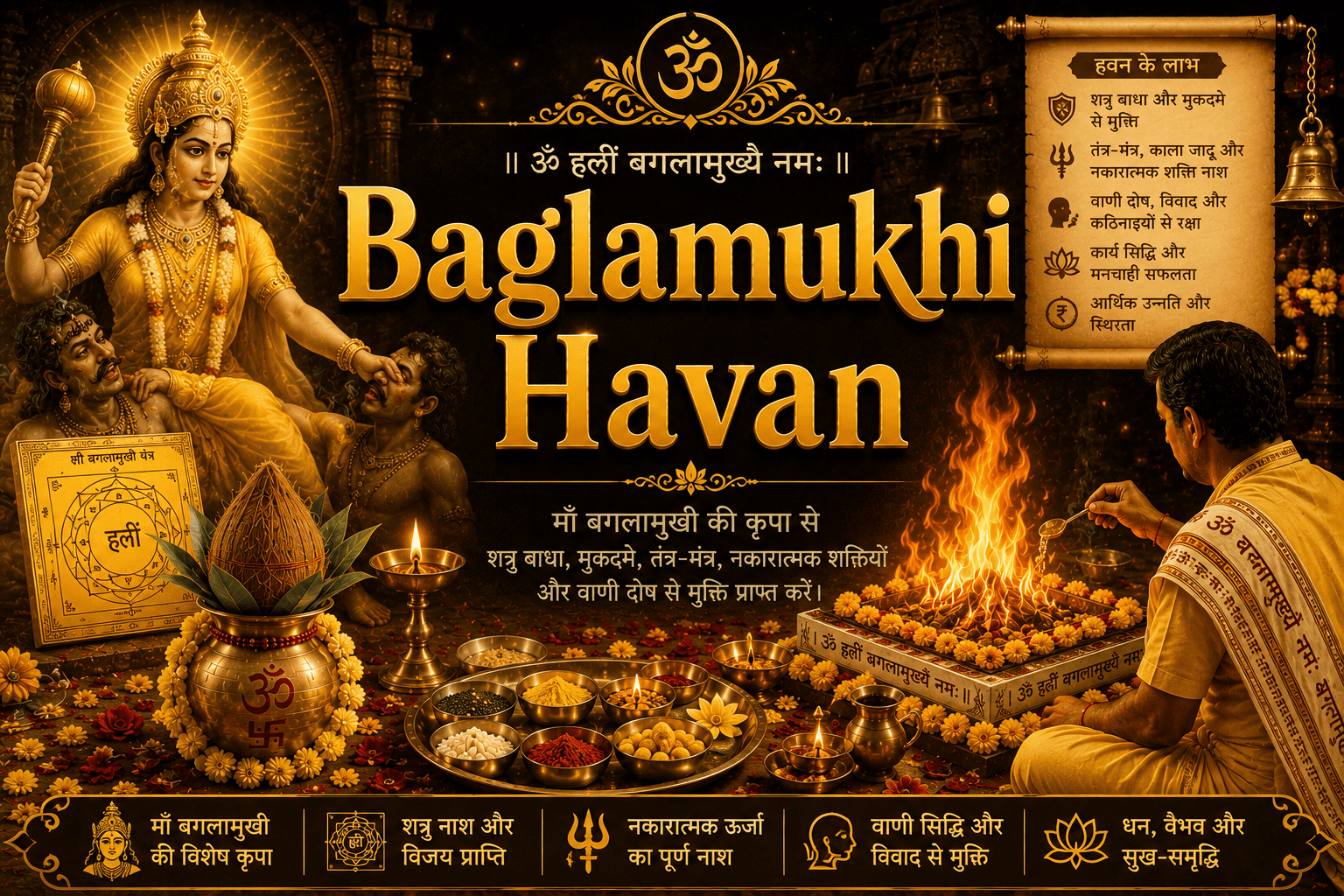
What is Baglamukhi Havan? The Cosmic Science of StambhanaBaglamukhi Havan is a highly potent fire ritual dedicated to Goddess Baglamukhi to invoke Her protective armor (Kavach) and pacify severe planetary afflictions, court cases, business rivalry, and malicious energy (Nazar or Black Magic). [Maa Baglamukhi (Pitambara)] <---> [Yellow Fire / Stambhana Energy] | v ==> [BAGLAMUKHI HAVAN (SACRED OFFERINGS)] <== | v (Paralyzes Negative Energies, Silences Evil Speech & Enmity) | v ==> [Victory, Protection & Justice] <== The Power of "Pitambara" EnergyYellow Color Resonance: Maa Baglamukhi is deeply fond of the color yellow (Peeta). Everything in Her worship—from Her attire, flowers, turmeric, yellow mustard (Pili Sarso), to the yellow cloth worn by the devotee—attracts the highest density of protective energy. Stambhana Shakti: Her unique weapon is the power to freeze or immobilize hostile intentions. She turns defeat into victory and transforms chaos into absolute order. Who Should Perform Baglamukhi Havan? Vedic priests and Tantra scholars specifically recommend Baglamukhi Havan for individuals facing:Severe Legal Battles & Court Cases: Ongoing litigation, false allegations, or unresolved property/tax disputes. Business Rivalry & Corporate Warfare: Unfair tactics by competitors, trade blocks, or persistent operational sabotage. Protection Against Enemies & Evil Eye: Threats from hidden enemies (Shatru Dosh), jealousy, or severe negative energetic attacks. Political & Administrative Struggles: Seeking success in competitive elections, high-stakes negotiations, or securing official positions. Rahu & Mars Afflictions: Severe malefic periods of Rahu, Ketu, or Mars in the birth chart causing sudden reputational losses. Insight from an Acharya: Maa Baglamukhi is not a deity invoked to harm others; She is the supreme defender of Truth (Dharma). When you perform Her Havan with righteous intent, She forms an impenetrable shield around you and ensures justice prevails. Essential Samagri (Ritual Ingredients)Because Maa Baglamukhi's ritual requires specific yellow-hued ingredients, gathering the correct Samagri is essential:Item CategorySacred IngredientsPrimary OfferingsYellow mustard seeds (Pili Sarso), Turmeric roots (Haldi ki Ganth), Lotus seeds (Kamalgatta), Yellow flowers (Marigold/Kaner). Hawan BasePure Cow Ghee, Mango wood/Dry Wood (Samidha), Gugal, Camphor, Cloves (Laung), Cardamom. Altar setupYellow cloth (for altar and devotee), Yellow sweets (Besan Ladoo), Chana Dal, Saffron (Kesar).
Step-by-Step Baglamukhi Havan VidhiDue to the intense nature of Mahavidya rituals, this Havan must be conducted with absolute purity and correct pronunciation of mantras under the guidance of a trained Acharya.
1. Purification & Yellow Sankalp:20 Minutes. The devotee (Yajaman) takes a holy bath, wears fresh yellow attire, and sits on a yellow wool mat (Asana) facing East or North. The priest performs Pavitrikaran. Holding Gangajal, turmeric, yellow flowers, and coins in their palm, the devotee recites the formal Sankalp—stating their Name, Gotra, location, and intent (e.g., victory over litigation or protection).
2. Ganesh & Kalash Sthapana:25 Minutes. Lord Ganesha is worshiped first to remove impediments. A copper/brass Kalash covered with yellow cloth and topped with a coconut and mango leaves is established (Varun Puja) to anchor divine purity.
3. Maa Baglamukhi Avahan & Shringaar:30 Minutes. An idol or Yantra of Maa Baglamukhi is established on a yellow altar. The deity is adorned with yellow clothes, turmeric paste, saffron, yellow marigold flowers, and offered yellow sweets while chanting Her Dhyana Shloka.
4. Mantra Jaap (Recitation):60 - 90 Minutes. Priests chant the designated counts of the Baglamukhi Beej Mantra using a Haldi (Turmeric) rosary (Mala):Mantra: "Om Hleem Baglamukhi Sarve Dushtanam Vacham Mukham Padam Stambhay Jivham Keelay Buddhim Vinashay Hleem Om Swaha"
5. The Core Yellow Havan:45 Minutes. The Hawan Kund is prepared. Cow ghee, yellow mustard seeds, lotus seeds, turmeric pieces, and cloves are submitted into the sacred fire with each recitation of the mantra ending in "Swaha".
6.
Purnahuti, Aarti & Kshamapana:20 Minutes. A dry coconut filled with ghee, yellow cloth, and spices is offered as
Purnahuti into the flames. The ritual concludes with the Pitambara Aarti followed by asking for forgiveness (Kshamapana) for any unintended errors during the ritual. Sacred Sites for Baglamukhi HavanWhile Baglamukhi Havan can be performed in quiet, pure home sanctuaries, performing it at designated Siddha Peethas yields immense spiritual power: +-------------------------------------------------------------+ | RENOUWNED BAGLAMUKHI SIDDHA PEETHAS | +-------------------------------------------------------------+ |
1. Baglamukhi Temple, Nalkheda (Agar Malwa, Madhya Pradesh) |
|
2. Pitambara Peeth, Datia (Madhya Pradesh) |
|
3. Baglamukhi Temple, Bankhandi (Kangra, Himachal Pradesh) |
+-------------------------------------------------------------+ Nalkheda (Madhya Pradesh): Situated on the banks of the Lakhundar River, this ancient temple is considered one of the most powerful centers in India for Tantrik and Vedic Baglamukhi Pujas. Datia (Madhya Pradesh): Established by Swami Ji Maharaj, Pitambara Peeth in Datia is world-famous for its high-energy Mahavidya sadhanas and political/legal protection pujas. Bankhandi (Himachal Pradesh): A peaceful Siddha Peeth in the Kangra Valley, renowned for fulfilling desires and eliminating hidden obstacles. Important Rules for DevoteesWhen undertaking or participating in a Baglamukhi ritual:Maintain Strict Purity: Observe a strict Sattvic (vegetarian) lifestyle, avoiding garlic, onion, and alcohol during and after the ritual days. Wear Yellow: Always wear clean yellow unstitched or traditional clothing during the Puja and Havan. Righteous Purpose: Ensure your intention is purely protective and seeking justice. Baglamukhi energy is protective and responds best to truth and integrity. Donations: Donate yellow food items (such as Besan sweets, Chana Dal, Turmeric, or yellow cloth) to learned priests or the needy following the ceremony.