
The Ultimate Guide to Rudrabhishek: Cosmic Vibrations, Sacred Liquids & Ritual Vidhi
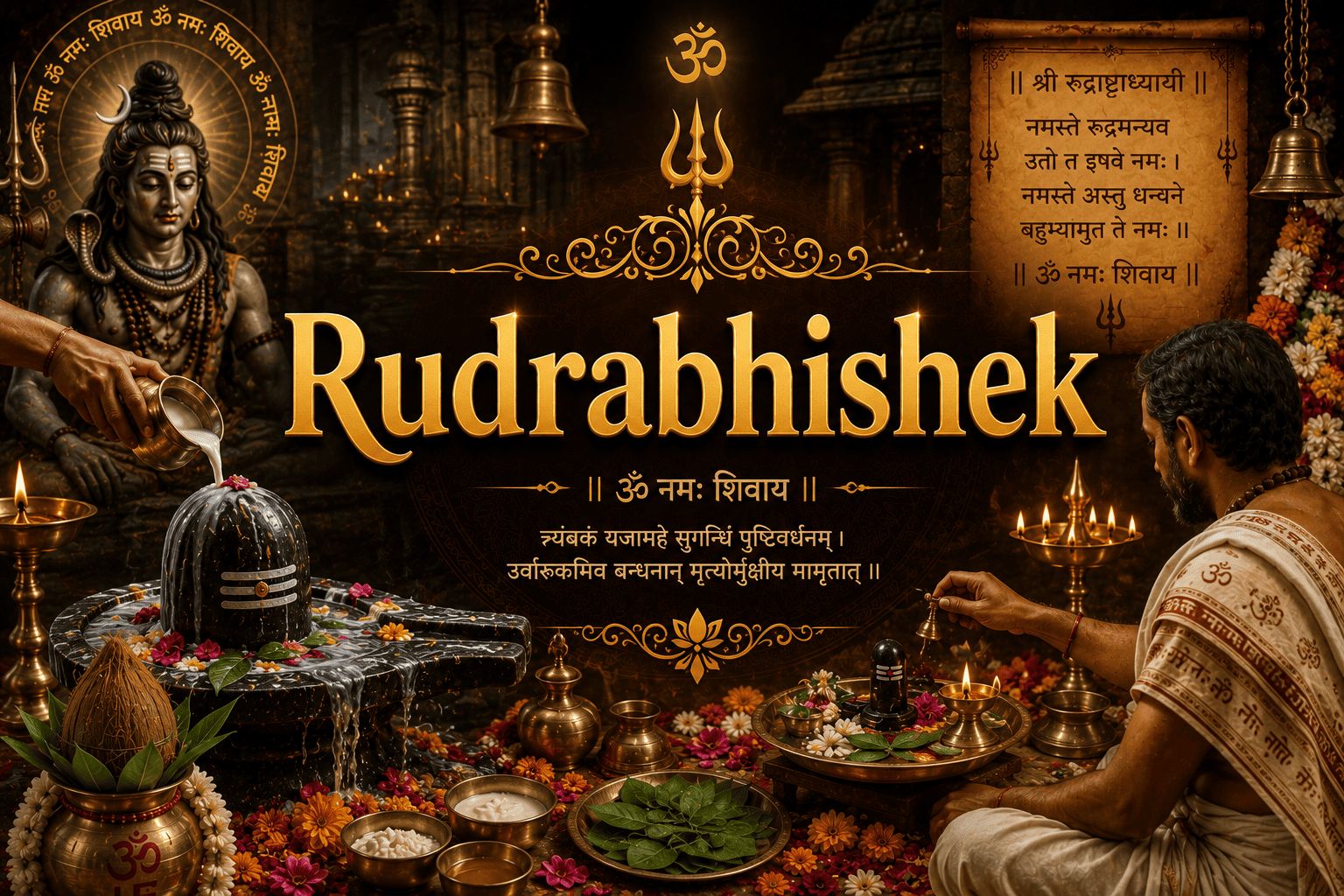
What is Rudrabhishek? The Sacred MechanicsThe term Rudrabhishek is derived from two Sanskrit words: Rudra (Lord Shiva’s elemental, transformative form) and Abhishek (the ritual pouring of sacred liquid offerings). Lord Shiva is known as Abhishek Priyah—the One who loves sacred baths. Unlike other deities who are satisfied primarily with elaborate floral offerings or wealth, Shiva's cosmic heat is calmed by the gentle, continuous flow of cool liquids accompanied by Vedic sound vibrations. [Vedic Sound Vibrations (Shri Rudram)] + [Sacred Liquid Offerings (Gangajal / Milk / Honey / Ghee)] | (Poured over Shivlinga) | [Absorbs Cosmic Heat & Cleanses Karmas] | ==> [Bestows Peace, Health & Prosperity] <== According to Vedic scriptures, every drop of sacred liquid that flows down the curve of the Shivlinga while the Rudra Suktam or Chamakam is chanted creates powerful sound and electromagnetic waves that purify the surrounding atmosphere, neutralize negative energy (Vaastu and Karmic flaws), and grant immediate relief to the devotee. The Power of Abhishek Dravyas (Sacred Liquid Offerings)Different liquid ingredients (Dravyas) used during Rudrabhishek attract distinct spiritual benefits and fulfill specific life desires:Sacred Liquid (Dravya)Primary Intent & Astrological BenefitPure Gangajal / Sacred WaterGrants peace of mind, spiritual liberation (Moksha), and general purity. Raw Cow Milk (Kachha Dudh)Ensures longevity, good health, and shields children from illness. Removes Moon afflictions. Cow Milk Curd (Dahi)Bestows prosperity, property, vehicles, and removes obstacles in buying a home. Pure Cow Ghee (Ghruta)Removes physical ailments, cures chronic diseases, and restores bodily vitality. Natural Honey (Madhu)Removes speech defects, soft-skills barriers, and bestows sweet harmony in marriage. Sugarcane Juice (Ikshu Ras)Eliminates poverty, clears heavy debts, and brings continuous financial abundance. Scented Oil / Chandan WaterGrants fame, high social status, emotional stability, and refined intellect. Panchamrit (All 5 Sacred Items)The ultimate balanced offering for overall fulfillment, prosperity, and spiritual grace. Astrological & Life Triggers: When to Perform RudrabhishekA formal Rudrabhishek is recommended across various life situations:Relief from Saturn (Shani) Afflictions: Highly effective during Sade Sati, Dhaiya, or harsh Saturn Dasha/Antardasha. Overcoming Rahu-Ketu Crises: Pacifies sudden turbulence, illusions, and severe confusion caused by shadow planets. Neutralizing Pitri Dosh & Kaal Sarp Dosh: Performing Rudrabhishek with black sesame seeds and water dissolves inherited ancestral obstacles. Career Delays & Business Stagnation: Offering sugarcane juice or honey breaks professional stagnation and unlocks new revenue streams. Health Recovery & Longevity: Conducting Mahamrityunjaya Rudrabhishek with cow milk and ghee accelerates medical recovery. Insight from an Acharya: Shiva is Ashutosh—the One who is easily pleased. You do not need grand wealth to invoke His grace; even a single pot of clean water offered with pure devotion (Bhakti) and sincere chanting holds more weight than lavish displays without faith. Varieties of Rudrabhishek CeremoniesDepending on the scale of chanting and the number of priests (Pandits) involved, Rudrabhishek takes several traditional forms:Rudra Abhishek: Standard single-day worship where the Rudra Ashtadhyayi (8 chapters) or Shri Rudram is recited once alongside liquid offerings. Ekadasini Rudrabhishek: Eleven priests chant the Shri Rudram 11 times simultaneously (total 121 recitations), creating an intense field of divine energy. Laghu Rudra: 11 priests perform Ekadasini over multiple days or 121 recitations are completed in a single grand day. Maha Rudra: 121 qualified priests recite the Shri Rudram 11 times (1,331 total recitations) accompanied by a grand Hawan. Ati Rudra: The highest form of Shiva worship, where 1,331 recitations are performed 11 times over 11 days (14,641 recitations), typically conducted for global peace and monumental spiritual transformation.
Step-by-Step Rudrabhishek Vidhi (Ritual Framework)A complete Vedic Rudrabhishek follows a structured protocol (Karmakand) led by qualified priests. Essential Samagri (Ritual Items)Shivlinga Altar: Brass, Stone, or Parard (Mercury) Shivlinga placed in a wide copper or brass basin (Jaldhari). Liquid Dravyas: Gangajal, raw cow milk, curd, honey, ghee, sugarcane juice, rose water. Offerings: Bilva leaves (Belpatra), Shami leaves, Dhatura fruit and flowers, white lotus, Bhasma, sandalwood paste, Akshat (unbroken rice). Hawan Materials: Mango wood (Samidha), black sesame, barley, cow ghee, specialized Rudra Hawan Samagri.
1. Purification & Sacred Sankalp:15 Minutes. The devotee (Yajaman) bathes, puts on traditional attire (white, light yellow, or unstitched cloth), and sits facing East or North. The Acharya performs Pavitrikaran (purification) using holy water. The devotee holds water, rice, flowers, and coins in their palm while reciting the formal Sankalp—stating their Name, Gotra, location, and specific intent (health, wealth, or dosha shanti).
2. Ganesh Puja & Kalash Sthapana:20 Minutes. Lord Ganesha is worshiped first to remove impediments. A copper Kalash filled with sacred water, mango leaves, and a coconut wrapped in cloth is established (Varun Puja) to invoke divine cosmic energies into the space.
3. Shivlinga Consecration & Shringaar:30 Minutes. The Shivlinga is placed over the basin. The priest cleanses the deity with holy water, applies fresh Bhasma, sandalwood paste, and offers Bilva leaves and Dhatura flowers while chanting the Nyasa and Dhyana Mantras.
4. The Grand Abhishek (Continuous Liquid Flow):60 - 90 Minutes. Priests begin chanting the Shri Rudram / Rudra Ashtadhyayi with precise Vedic pitch and rhythm (Swar). Simultaneously, the sacred liquids—Gangajal, raw milk, curd, honey, ghee, and sugarcane juice—are poured continuously over the Shivlinga using a perforated copper vessel (Sahasradhara) or handcrafted jal-patra.
5. Rudra Hawan (Fire Ceremony):30 Minutes. A sacred fire is lit in the Hawan Kund. Offerings of cow ghee, barley, black sesame seeds, and herbs are submitted into the holy flames with each mantra recitation ending in "Swaha", transferring the sound energy directly to the cosmos.
6. Maha Aarti & Prasad Distribution:15 Minutes. The ritual concludes with the grand Karpura Gauram Aarti, burning pure camphor. The holy liquid (Charanamrit) and offerings are distributed to family and devotees as blessed divine grace. Best Sacred Destinations for RudrabhishekWhile Rudrabhishek can be conducted at home or in local Shiva temples, performing it at Siddha Peethas or Jyotirlingas amplifies its energy exponentially:
+-------------------------------------------------------------+ | RENOUWNED DESTINATIONS FOR RUDRABHISHEK | +-------------------------------------------------------------+ |
1. Mahakaleshwar Temple, Ujjain (Jyotirlinga Energy) |
|
2. Kashi Vishwanath, Varanasi (Sacred Ganga Banks) |
|
3. Trimbakeshwar Temple, Nashik (Source of Godavari) |
|
4. Somnath Temple, Gujarat (First Among Jyotirlingas) |
+-------------------------------------------------------------+ Mahakaleshwar Temple (Ujjain, Madhya Pradesh): The abode of Lord Mahakal. Performing Rudrabhishek here, particularly during morning hours or with Bhasma Aarti alignment, offers unparalleled protection against time and disease. Kashi Vishwanath (Varanasi): Worshiping Shiva in Kashi on the banks of the sacred Ganga grants immediate spiritual elevation and burns severe karmic knots. Trimbakeshwar (Nashik): The unique three-faced Jyotirlinga representing Brahma, Vishnu, and Mahesh makes it ideal for complete family peace and Dosha Shanti. Rules for Performing Rudrabhishek at HomeIf you are performing a simple Rudrabhishek at home, observe these essential guidelines:Maintain Complete Purity: Clean the puja room thoroughly and ensure all vessels (Patra) are made of copper, brass, or silver. Avoid using steel or plastic utensils. Offer Bilva Leaves Correctly: Always offer smooth, unbroken three-leaf Bilva leaves (Tridal) with the soft side facing down toward the Shivlinga. Do Not Circumambulate Fully: During Shiva worship, never cross the Someshwar/Jaldhari (the outlet channel through which abhishek liquid flows out). Always perform a half-circle (Ardh-Parikrama) and return. Sattvic Lifestyle: Observe a strict vegetarian diet and maintain quiet, peaceful thoughts on the day of the Abhishek.