The Complete Guide to Ark Vivah: Cosmic Union, Vedic Rituals & Marital Relief
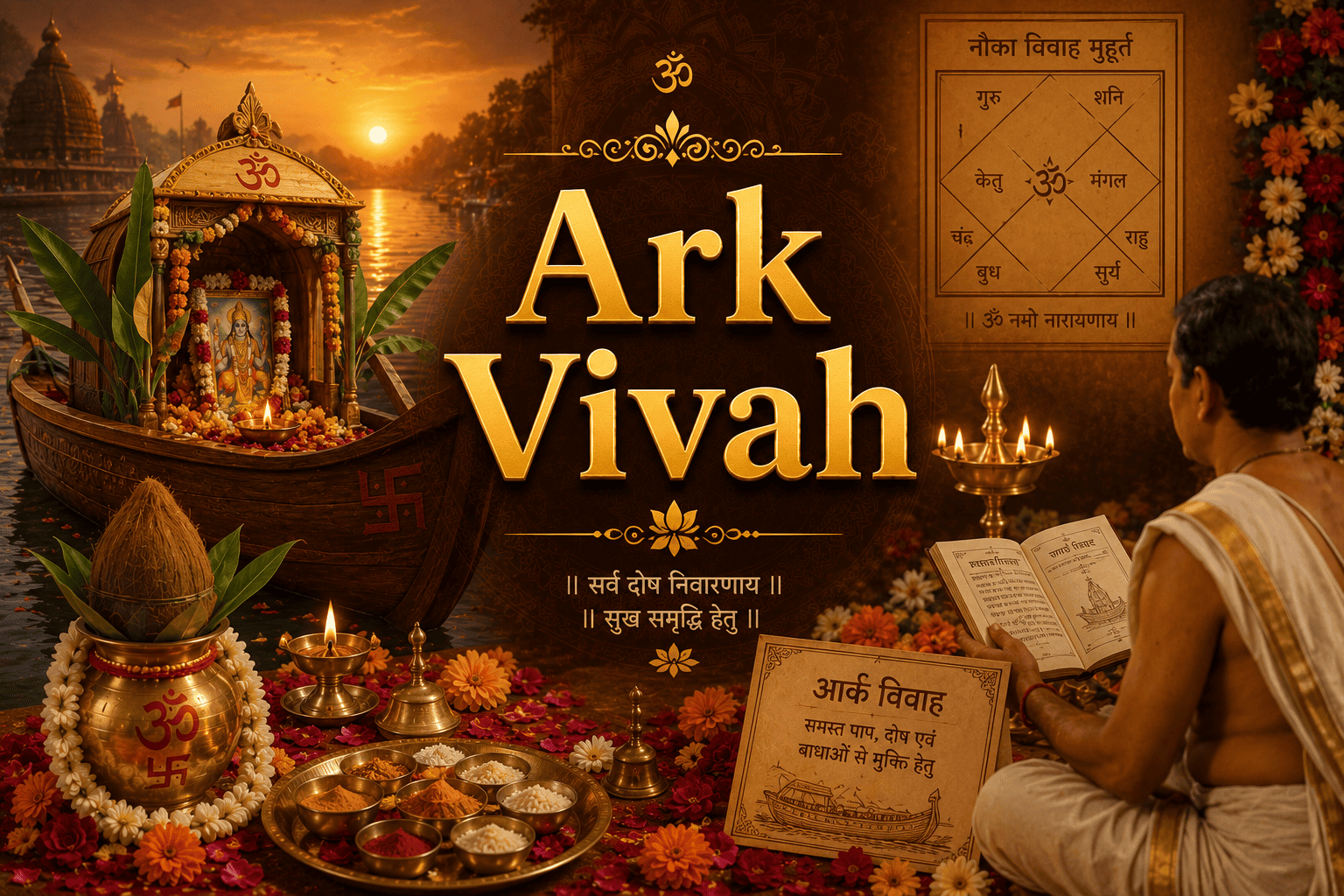
Understanding the Energy: What is Ark Vivah? In Vedic symbolism, the Ark plant (commonly known as Aak, Madar, or Crown Flower) is directly governed by Surya Dev (the Sun God). It possesses fiery, purifying, and protective qualities. Ark Vivah is a specialized pre-marital ceremony performed exclusively for a male (Groom) before his actual human wedding. In this ceremony, the groom is symbolically married to the Ark plant, which has been consecrated with Vedic mantras and invoked with divine solar energy. [Sacred Solar Energy of Surya Dev] | [Male Devotee / Yajaman] <---> [Consecrated Ark (Madar) Plant] | [Absorbs Surya / Mangal Heat] | [Ritual Pruning / Neutralization] | ==> [Path Cleared for Human Marriage] <== During the wedding rites, the intense malefic heat (Tapa) generated by harsh planetary alignments—particularly Sun (Surya), Mars (Mangal), Rahu, or Saturn (Shani)—is transferred from the individual into the resilient solar organism of the Ark plant. Once the vows and circumambulations (Phere) are complete, the plant is offered respectful closure, leaving the male devotee spiritually purified and protected. Astrological Triggers: Who Should Perform This Ceremony? A knowledgeable astrologer or Karmakandi priest typically recommends an Ark Vivah when specific planetary patterns appear in a male's birth chart (Kundali):Severe Male Mangal Dosh (Kuja Dosha): When Mars occupies the 1st, 4th, 7th, 8th, or 12th house in a man's chart, indicating potential conflict, health trouble, or emotional distance with his future wife. Sun-Mars Affliction (Surya-Mangal Yuti): An overly dominant Sun or Mars sitting in the 7th house (house of marriage), creating an excess of ego, short temper, or fiery friction. Risk of Multiple Marriages (Dwi-Vivah Yoga): Astrological combinations hinting at the dissolution of a first marriage. The Ark Vivah acts as the symbolic first marriage, fulfilling the planetary requirement. Persistent Engagement Breakages: A pattern where marriage talks repeatedly break down after initial agreement without logical explanation. Severe Nadi Dosh or Pitri Dosh: When ancestral karmic debts affect family lineage and marital harmony. Insight from an Acharya: Nature is the ultimate sanctuary in Vedic wisdom. The Ark plant naturally thrives in intense heat and arid soil—it is built to handle the fiery energy of Surya and Mangal without breaking. By connecting with it in ritual worship, you let nature bear what human relationships cannot. Key Distinctions: Ark Vivah vs. Kumbh VivahWhile both fall under the umbrella of symbolic pre-marital remedies (Gaud-Vivah), their application is distinct:CharacteristicArk VivahKumbh VivahPrimary RecipientTraditionally performed
for MalesTraditionally performed
for FemalesSacred ElementLiving Ark (Madar) Plant / TreeEarthen Clay Pot (Kumbh)Governing DeitySurya Dev (Sun God) & Lord ShivaLord Vishnu & Varuna DevCore PurposeNeutralizes excess solar/mars heat & single-groom doshasAbsorbs marital delays & severe Kuja/Nadi doshasDetailed Ritual Framework: The Vedic VidhiPerforming an Ark Vivah requires absolute adherence to scriptural guidelines. It should always be conducted on an auspicious day—such as a Tuesday, Sunday, or during a favorable Nakshatra—under the guidance of qualified priests. Essential Samagri (Ritual Elements)Plant Setup: A healthy, growing Ark (Madar) plant in a pot or at a clean sacred site. Groom Attire & Offerings: Yellow or red dhoti/kurta for the groom, sacred thread (Janeu), sehra or crown, yellow cloth for the plant, sweets (Modak or jaggery-based items). Holy Liquids: Gangajal, raw cow milk, honey, curd, ghee, rose water. Hawan Materials: Mango wood, red sandalwood powder, black sesame, barley, cow ghee, specialized solar herbs (Surya Samagri).
1. Initial Purification & Sankalp:20 Minutes. The groom bathes, dons fresh traditional attire, and sits on a clean mat facing East. The Acharya performs Pavitrikaran (ritual purification). Holding water, rice, red flowers, and betel nut in his right palm, the groom recites the formal Sankalp—declaring his Name, Gotra, and intent to perform Ark Vivah for peace and marital harmony.
2. Ganesh Worship & Varun Puja:25 Minutes. Lord Ganesha is invoked to eliminate all hurdles. This is followed by Varun Puja (water deity worship) on a copper Kalash to invoke cosmic purity and balance the upcoming solar ritual.
3. Consecration of the Ark Plant:30 Minutes. The Ark plant is cleansed with Ganga water and decorated with turmeric, kumkum, flower garlands, and a sacred yellow cloth. The Acharya chants Vedic Surya Mantras and Aditya Hrudayam passages, consecrating the plant and invoking divine solar consciousness into it.
4. Sacred Wedding Rites & Phere:45 Minutes. The groom performs full Vedic wedding rituals with the consecrated Ark plant. He offers the sacred thread (Janeu), exchanges flower garlands (Jaimala), and recites formal mantras. He then takes four circumambulations (Phere) around the Ark plant while Vedic hymns are chanted to complete the union.
5. Surya & Mangal Hawan:30 Minutes. A sacred fire is lit in the Hawan Kund. Offerings of cow ghee, red sandalwood, barley, and sesame are made into the fire with each recitation of the Surya Gayatri and Mangal Beej Mantras, ending in "Swaha" to consume all malefic planetary energy.
6. Pruning & Final Closure:15 Minutes. After the
Purnahuti, a small symbolic portion or leaf of the Ark plant is respectfully pruned, or the ceremony concludes with a formal farewell (Visarjan), signifying that the planetary obligation is fulfilled. The groom changes his clothes, symbolizing his rebirth into a clean karmic state. Best Sacred Destinations for Ark VivahAlthough this ceremony can be organized at local temples or clean outdoor sanctuaries with an expert Acharya, performing it at spiritually potent locations yields profound peace: +-------------------------------------------------------------+ | RENOUNCED CENTERS FOR ARK VIVAH | +-------------------------------------------------------------+ |
1. Mangalnath Temple, Ujjain (Epicenter of Mars Energy) |
|
2. Trimbakeshwar Temple, Nashik (Siddha Kshetra for Pujas) |
|
3. Sun Temples / Ghats (Konark, Lolarka Kund Varanasi) |
|
4. Banks of Holy Rivers (Ganga, Narmada, Godavari) |
+-------------------------------------------------------------+ Mangalnath Temple (Ujjain): Revered as the cosmic birthplace of Mars. Conducting Ark Vivah here provides an unmatched defense against severe Kuja and Surya afflictions. Trimbakeshwar (Nashik): A primary pilgrimage center for all Vedic Dosha Shanti ceremonies, ensuring pristine execution by hereditary pandits. Lolarka Kund (Varanasi) / Sun Shrines: Sacred water bodies and temples dedicated to Lord Surya, where solar energies are naturally balanced.
Essential Post-Ritual GuidelinesFollowing the completion of the Ark Vivah, the devotee should observe these practices to maintain spiritual alignment:Maintain Confidentiality: Respect the sacred nature of the ritual by keeping its execution private within the immediate family and discussing it transparently with your future bride. Offer Water to Surya Dev: Begin every morning by offering water mixed with red flowers and a pinch of kumkum to the rising Sun (Surya Arghya). Practice Sattvic Discipline: Avoid non-vegetarian food, alcohol, and explosive anger for at least 7 days post-puja. Charity on Sundays & Tuesdays: Donate wheat, jaggery, red lentils (Masoor Dal), or copper items to temple priests or those in need.